• Why you should appreciate people like Malcolm X

    MTE5NDg0MDU1MDU1ODYxMjYz

    saviour

    powerful

    determined

    supportive

    spiritual

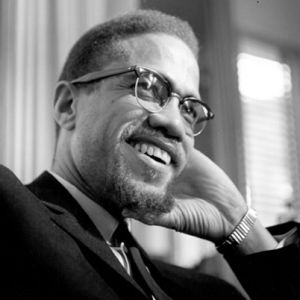
    what are your thoughts when someone says Malcolm X?

    when I hear someone mention Malcolm x, it makes me think about the different stories I hear about him and the more I hear about him, the more I appreciate and understand that he is one of the greatest that has saved  us black people from being judged for our colour. All though life is not exactly perfect, at least there are many of us that can stand and say ‘We are here and we are proud of who we are’.

    25334_1.preview“I am not a racist. I am against every form of racism and segregation, every form of discrimination. I believe in human beings, and that all human beings should be respected as such, regardless of their color.” — Malcolm X

    (posted by Nadia Everett)


  • Reclaiming our African Identity

    Gratitude
    Community
    Ancestors
    Spirituality
    History

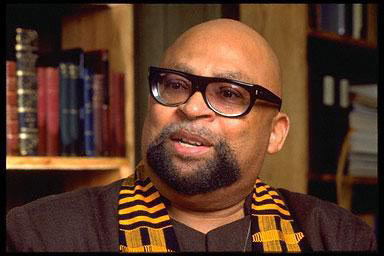
    Dr. Maulana Karenga

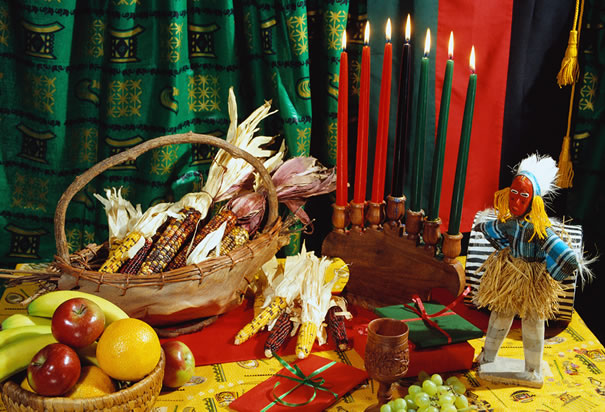
    Kwanzaa is a week-long celebration of African heritage and is observed from December 26th to January 1st. It has seven core principles (Nguzo Saba) and was created by Dr. Maulana Karenga. It was first celebrated in 1966.
    From: http://nanabonsu.com/community-and-culture/kwanzaa-celebrations/ 

    Why are we so afraid to reclaim our African identity? 

    Growing up within a black community the topic of whether Caribbean people originated from Africa was quite common amongst my primary school peers.

    I can still hear the dramatic outcries of the Caribbean students protesting against what they felt to be an absolute insult because after all Africans were just “a charity case of uncivilised poor black people.” This was a racially negative stereotype that was constantly being portrayed within the media. It’s quite to safe to say our knowledge of Africa was extremely limited and we were in fact ignorant on the topic of African history and culture which I believe many black people still are today.

    I believe one step to resolve this issue would be to start teaching the younger generation true African history and traditions such as Kwanzaa. What is not encouraging is finding out the history teaching in schools are going against this idea according to  in an article called Black British History Must Feature Throughout the School Curriculum.

    “A people without the knowledge of their past history, origin and culture is like a tree without roots.”
    ― Marcus Garvey (The father of Pan-Africanism)

    (Authored by a member of young roots)


  • Young Roots Project about the 1945 Pan-African Congress in Manchester

    Would you like to develop some media skills? Are you less than 25 years old? Are you interested in Black History, including Pan-African issues and history? 

    Welcome to the PAC45 YOUNG ROOTS project!

    The PAC45 Young Roots project will provide an educational and inspiring opportunity for 15-20 young people, primarily of African-Caribbean heritage, in deprived inner city Manchester. The heritage focus of the project is researching the 1945 5th Pan African Congress held in Manchester and making connections with world events today, as discussed at the PAC45 Conference in Manchester in October 2015.

    The 1945 conference addressed issues such as ‘The Colour Problem in Britain’; ‘Imperialism in North and West Africa’; ‘Oppression in South Africa’; ‘The Problems in the Caribbean’; and ‘Women in the West Indies’. Although the situations have moved on, many of the themes are still vitally important today. The young people will be supported to research these themes, focusing on key individuals from the 1945 and 2015 conferences.

    The young people will conduct interviews and receive audio-visual production, post production and online publishing training. They will play a key role in producing a documentary programme, web pages and social media, using Youtube, Facebook, Twitter, Instagram and Vines. The young people will use the knowledge and skills they gain to become heritage advocates; making heritage more accessible and relevant to the needs and interests of other young people and huge online audiences.

    REGISTER NOW:

    > Download the registration form

    > Download the work plan for the project


  • Speaker Line Up – Pan-African Congress Commemoration / Conference

    logo-dark2Good Day All

    With less than 10 days to go to the conference of 2015! Please help us spread the word.

    Please send out to networks and we hope to see you all at the conference.

    We have a supberb line up of speakers:

    Naa Acquah Gen SEC UoM

    Professor Hakim Adi; Significance of 1945 Congress

    Viv Ahmun; Economics

    Kadija George; Women In Pan African Movement

    Cecil Gutzmore; Garvey

    Zita Holbourne; Co Chair and Performing Artist

    Lee Jasper; Co Chair & Pan African for the 21st Century

    Dr Umar Johnson; Pan African Globally

    Roger McKenzie; Work and Trade Unions

    Rameri Moukam; Psychologist

    Sai Murray; Climate Change & Jusitce

    Akala; Decolonising My Curriculum

    Professor Sir Emeritus Godfrey Palmer OBE DSc; Science and Technology

    Jordan Stephen; Chair Youth Question Time

    Temi Mwale *tbc

    Please share with your networks and we’ll see you around the 16th to the 18th.

    Please visit our website at www.pac45foundation.com to register

    Price £7 (for Saturday only, Fri & Sun are Free entry)

    Adande

  • It’s time to remember, not forget

    It was 15th October 1945, and Manchester was at the forefront of the battle against European colonialism. For six days, the city gathered together and empowered Africans worldwide, organising the 5th Pan African Congress to tackle the consequences of colonisation. In recognition of this momentous occasion, Manchester will be holding a commemorative conference this October to mark the 70th Anniversary of the congress.

    This commemoration could not come at a more appropriate time. Last week, the Prime Minister David Cameron declared that issues with historic injustices, recent wars, poverty or hardship were merely a ‘grievance justification’. In a keynote speech aimed at tackling extremism and promoting integration, the Prime Minister disregarded key issues that affect ethnic minorities in Britain today.

    In contrast, the original Pan African Congresses were a series of meetings intended to address issues facing Africa as a result of the European colonisation of the continent, rather than dismiss them. The 5th Pan African Congress was significant. Taking place directly after WWII, at a time when people sought to come together in the so-called spirit of ‘45, delegates convened in efforts to end racial discrimination and colonial rule. They set out demands for better human rights and equal economic opportunity for Africans across the globe. The event was the first to be organised by Africans themselves, and delegates included the only US representative W.E. Dubois, a perennial feature of the congress and the British representative Amy Ashwood Garvin, who opened the ceremony. The revolutionary figures Kwame Nkrumah and Jomo Kenyatta were also in attendance, using this influential convention to lay out their plans to achieve independence for their respective countries.

    Considering the issues still surrounding ethnic minorities today; institutionalised racism, racial discrimination, deaths in police custody and high unemployment to name a few, surely it’s time to reflect on the heritage and ‘grievances’ of neo-colonialism, rather than forget? Such attitudes have limited progress within Britain as well as across the global diaspora. It is also time to remember the efforts of those that preceded us, including those that organised and attended the 1945 Pan African Congress and persevere to continue with their work.

    The 2015 commemorative conference promises to uphold the spirit of 1945 and explore the issues that affect Africans on a global basis; economically, politically and socially. Organised by a Manchester based Planning Committee, the event will take place on Friday 16th October – Sunday 18th October. International keynote speakers will open up the celebrations, discussing 1945 and beyond.

    The meeting will also comprise of activities, rallies and a youth conference. A full list of speakers and activities will be available soon. For further information or if you would like to get involved please email contact@pac70.org.

    TNT News Joanne Muigua


  • Nana Bonsu Project Exhibition & Community Celebration

    Saturday, June 21, 2014 from 5:00 PM to 9:00 PM
    at Z-arts, 335 Stretford Rd, Hulme, M15 5ZA

    TO REGISTER YOUR PLACE, CLICK HERE

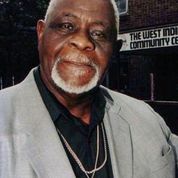
    The Nana Bonsu Project exhibition will be celebrating the life and work of Manchester’s most celebrated black campaigner Beresford Edwards aka “Nana Bonsu” (1930 – 2003) voted one of the 100 greatest Black Britons.

    nanabonsu-eventbrite_logo

    Born in Guyana, his contributions and achievements in the UK covered labour and workers rights, community development, young people development, community education and promoting African centred culture and lifestyle. He served as the General Secretary 1967 – 1971 of the Campaign Against Racial Discrimination, which led to the passing of the Race Relations Act 1968.

    The exhibition features educational and historical resources, a short play by young people “Wen Wi Com Afa De Boat”, a short film screening of oral history interviews and a presentation of the Nana Bonsu website: http://nanabonsu.com, plus refreshments and cultural entertainment.  We are grateful to the Heritage Lottery Fund for its support of this project.

    We hope to make this event a high point in the 2014 social calendar of Manchester’s African Caribbean communities and intend the exhibition to work as a meeting point and a platform for ongoing community development in Manchester. 


  • Celebration of the life and work of Beresford Edwards aka “Chief Nana Bonsu”

    Article from the Nubian Times, June 12th 2013:

    Old Trafford-based First Cut Media and Performing Arts Group have been awarded £49,700 from the Heritage Lottery Fund to produce an oral history celebrating the life and work of Beresford Edwards – a founding father of Manchester’s African Caribbean community.

    The project will enable 50 young people and volunteers to discover, explore and learn about their history and culture in the UK, specifically from the 1960’s – 2000’s.
    Nana-Bonsu

    Money from the Heritage Lottery Fund will also help them develop skills through training in research, video and audio recording techniques, desk-top digital editing, website development and desk-top publishing. Skills learnt will be valuable skills that young people can use to pursue a career.

    First Cut Media & Performing Arts Group is a registered charity with a long history of working with disadvantaged groups and individuals in order to develop their expressive, creative and technical skills in television, video and drama production.

    Over the past 20 years, the focus has been on providing media training opportunities for the communities of Moss Side, Hulme, Old Trafford and other inner city areas of Manchester.

    Ian Johns, Chair of First Cut, said: “We at First Cut are thrilled to have received the support of the Heritage Lottery Fund. The project will communicate how much British attitudes to racial diversity has changed since the 1960’s and will reflect on how much we all owe to the work of people like Berry Edwards in promoting equal opportunities.”

    Sara Hilton, Head of the Heritage Lottery Fund North West, commented: “We at the Heritage Lottery Fund are delighted to be supporting this project, run by volunteers, that will empower young people to explore and celebrate the life and work of Beresford Edwards ‘Chief Nana Bonsu’, one of the founding fathers of the African Caribbean community in Manchester.”

    Known variously as Baba Berry, Chief Nana Bonsu (the honorary title conferred on him by African Mancunians), was of huge importance to Britain’s African community, especially in Manchester, which became his home. He died in his native Guyana in 2003.

    The oral history project will highlight his role in initiatives such as the Campaign Against Racial Discrimination, social justice, equal opportunities, and his struggles with racism and discrimination.

    This gallery contains 1 photographs in all as   photograph etc.